
The Samsung Galaxy S27 Ultra is shaping up to be one of the most significant flagship upgrades in years. While the official launch isn’t expected until early 2027, credible leaks from industry insiders have already painted a compelling picture of what Samsung has in store. From a radical camera redesign to breakthrough battery technology, here’s everything we know about the Galaxy S27 Ultra.
Revolutionary Design Changes: Breaking the Mold
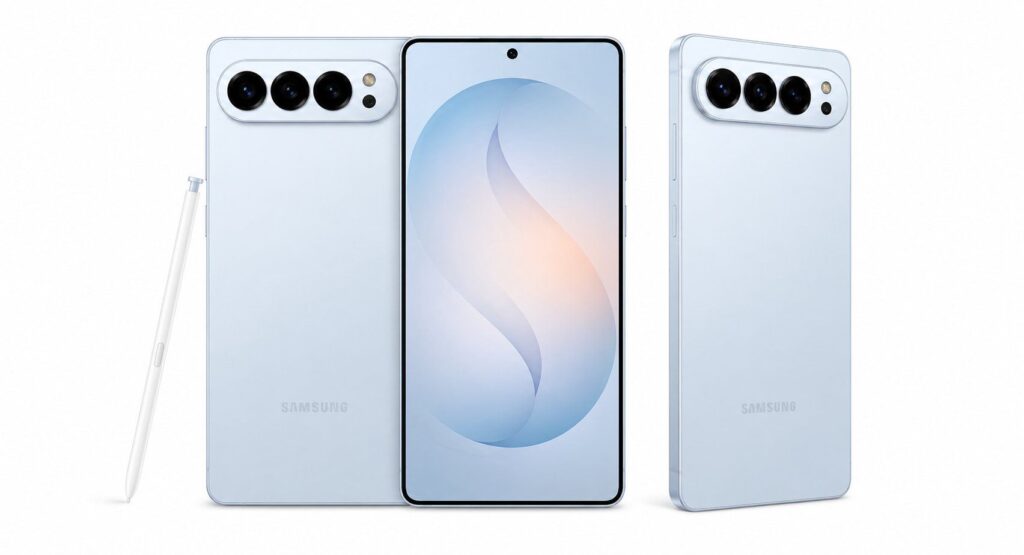
Horizontal Camera Module Replaces Vertical Array
One of the most striking changes to the S27 Ultra is its camera design, which appears similar to Google’s Pixel phones or recalls the Galaxy S10. This horizontal camera layout represents Samsung’s most dramatic design departure in years, moving away from the vertical camera stack that has defined Ultra models since the S21 series.
The new horizontal camera deco design offers several advantages. It creates better visual symmetry across the device’s rear panel, aligns with minimalist aesthetic trends in premium smartphones, and may improve internal component layout for better thermal management. More importantly, this redesign could enable the integration of Qi2 wireless charging technology, which requires careful positioning of magnetic components.
Refined Premium Aesthetics
Beyond the camera module, the S27 Ultra maintains Samsung’s commitment to premium design language. Expected features include slimmer bezels for a more immersive display experience, a centered front-facing camera that enhances symmetry, curved corners that provide comfortable ergonomics, and continued S Pen support, despite recurring rumors about its potential removal.
Camera System Overhaul: Four Years in the Making
The ISOCELL HP6: Samsung’s LOFIC Revolution
The S27 Ultra will feature a new 200MP sensor, the ISOCELL S5KHP6, incorporating LOFIC technology for dramatically improved dynamic range. This represents the first meaningful primary camera hardware change since the Galaxy S23 Ultra launched in 2023.
What Makes LOFIC Special?
LOFIC (Lateral Overflow Integration Capacitor) technology captures highlight detail that would otherwise be clipped in high-contrast scenes by routing overflow electrons into a dedicated capacitor. Unlike traditional multi-frame HDR, LOFIC captures extreme contrast within a single exposure, preventing highlights from blowing out and shadows from being crushed.
The practical benefits are substantial:
- Single-exposure HDR: Full dynamic range capture without merging multiple frames
- Reduced ghosting: Cleaner images with moving subjects
- Superior video performance: More stable HDR in video recording
- Natural-looking images: Less aggressive computational processing
Sensor Size and Technical Specifications
While the HP6 maintains the familiar 1/1.3-inch sensor size used since the S23 Ultra, the LOFIC integration and architectural improvements enable performance comparable to larger sensors. A jump from 1/1.3″ to 1/1.12″ (the size of Samsung’s HPA sensor for other manufacturers) provides approximately 35% more surface area, but Samsung opted for a refined approach that balances performance with device thickness and thermal management.
The Three-Camera Setup: Eliminating the 3x Telephoto
Early rumors indicate that the S27 Ultra will ditch its predecessor’s 3x telephoto camera. This controversial decision removes what has been criticized as the weakest link in Samsung’s camera arsenal—the often-mocked 3x telephoto that was considered tiny and underwhelming compared to competitors.
Expected Camera Configuration:
- Main Camera: 200MP ISOCELL HP6 with LOFIC (1/1.3-inch)
- Ultrawide Camera: Upgraded 50MP sensor (specifics TBD)
- Periscope Telephoto: Likely retained 50MP 5x optical zoom
- Front Camera: Enhanced selfie sensor (upgrade confirmed)
Previous leaks suggested the S27 Ultra’s primary, ultrawide, and front camera could all be replaced, marking a comprehensive camera system refresh.
Performance Hardware: Next-Generation Power
Snapdragon 8 Elite Gen 6 Pro: Custom Silicon
The S27 Ultra is expected to be powered by Qualcomm’s Snapdragon 8 Elite Gen 6 processor on a 2nm process. This chipset represents a significant leap in both performance and energy efficiency.
Processor Architecture:
- Two prime cores: Maximum performance for demanding tasks
- Three performance cores: Intensive application handling
- Three efficiency cores: Energy conservation during lighter workloads
The “Pro” designation suggests Samsung has secured a customized variant with enhanced capabilities beyond the standard Snapdragon 8 Elite Gen 6, continuing the company’s tradition of exclusive chipset partnerships with Qualcomm.
Memory and Storage Specifications
LPDDR6 RAM
The phone is rumored to come with up to 16GB of LPDDR6 RAM. LPDDR6 represents the latest generation of mobile memory, offering improved bandwidth and power efficiency over LPDDR5X. This enables better multitasking performance, faster app loading times, enhanced AI and machine learning capabilities, and superior gaming performance.
UFS 5.0 Storage
UFS 5.0 storage marks another generational leap, providing sequential read speeds exceeding 4,000 MB/s, write speeds approaching 3,000 MB/s, significantly reduced latency, and improved power efficiency. These specifications ensure the S27 Ultra can handle 8K video recording and editing, rapid app installations and updates, seamless large file transfers, and instant photo gallery loading.
Battery Technology Breakthrough
Silicon-Carbon Battery: The Game Changer
The S27 Ultra is tipped for a 5,500mAh silicon-carbon cell, a 10% capacity increase that also benefits from silicon-carbon’s higher energy density. This represents Samsung’s most significant battery upgrade in years.
Why Silicon-Carbon Matters:
Silicon-carbon batteries represent next-generation battery chemistry that offers higher energy density than traditional lithium-ion batteries, potentially faster charging capabilities, improved thermal characteristics, and longer cycle life with better capacity retention.
According to reports, Samsung is testing silicon-carbon batteries with capacities ranging from 12,000 mAh to 20,000 mAh, though the S27 Ultra will likely feature the more conservative 5,500mAh configuration for practical device dimensions.
Competitive Context
Five years at 5,000mAh while Chinese competitors pushed past 6,000mAh, then 7,000mAh, then 10,000mAh in some cases, was an increasingly difficult position to defend. The move to 5,500mAh addresses longstanding criticism while maintaining Samsung’s commitment to device ergonomics.
The physical cell size increases minimally or not at all due to silicon-carbon’s superior energy density, meaning Samsung achieves 10% more capacity without sacrificing the S27 Ultra’s premium slim profile.
Qi2 Wireless Charging: Finally Catching Up
Magnetic Wireless Charging Arrives
One of the most requested features is finally coming to the Galaxy S series. The S27 Ultra is expected to include full Qi2 wireless charging support with integrated magnets, eliminating the need for special cases that plagued the S25 and S26 series.
Qi2 Advantages:
- Perfect alignment: Magnets ensure optimal charging position every time
- Faster charging speeds: Up to 15W wireless charging (potentially higher with Samsung’s implementation)
- Wider accessory ecosystem: Compatibility with MagSafe-style accessories
- Improved user experience: One-handed placement without fumbling
The horizontal camera design suggests Samsung might be moving the camera to enable Qi2 charging, as internal magnets require careful layout planning to avoid interference with other components, particularly the S Pen.
Display and Additional Features
Expected Display Specifications
Based on the progression of Samsung’s Ultra lineup, the S27 Ultra should feature:
- Screen size: Approximately 6.9 inches
- Refresh rate: 144Hz adaptive (up from 120Hz)
- Resolution: QHD+ (3200 x 1440)
- Technology: Dynamic AMOLED 2X with improved brightness
- Protection: Gorilla Glass Victus 3 or newer
The phone’s screen is expected to remain around 6.9 inches with a 144Hz refresh rate, providing even smoother scrolling and better gaming performance than previous generations.
Software and Updates
Leaks suggest Samsung may equip the device with One UI 9.5 based on Android 17, potentially providing software updates for up to seven years. This extended support period matches Samsung’s commitment to long-term device value and addresses consumer demand for longer-lasting smartphones.
Advanced Security Features
Some speculations point to Polar ID facial recognition, which could hint at a sleek design, possibly without a notch. Enhanced biometric security combined with Samsung Knox would provide multi-layered protection for enterprise and privacy-conscious users.
Competitive Landscape and Market Positioning
Addressing the Chinese OEM Challenge
Chinese OEMs have been normalizing 1-inch sensors and 200MP periscope systems for two generations while Samsung kept the same 1/1.3-inch format. The S27 Ultra’s comprehensive hardware refresh directly addresses this competitive pressure.
Manufacturers like Xiaomi, Vivo, and HONOR have pushed the boundaries of mobile photography with larger sensors, innovative periscope systems, and aggressive feature sets. The S27 Ultra’s LOFIC integration, even with a conservative sensor size, demonstrates Samsung’s strategy of technological refinement over pure specifications.
The Four-Year Camera Stagnation Ends
The Galaxy S26 Ultra launched with only minor aperture upgrades bolted onto the same sensor Samsung has been shipping since the S23 Ultra, and critics noticed. The S27 Ultra represents Samsung’s acknowledgment that incremental improvements were no longer sufficient.
What This Means for Consumers
Who Should Wait for the S27 Ultra?
Photography Enthusiasts: The LOFIC sensor technology and upgraded camera system represent a generational leap in image quality, particularly in high-contrast scenes and video recording.
Power Users: LPDDR6 RAM and UFS 5.0 storage provide future-proofed performance that will remain competitive for years.
Battery-Conscious Users: The silicon-carbon battery breakthrough addresses the most common flagship smartphone complaint—battery life.
Wireless Charging Advocates: Full Qi2 support finally brings Samsung in line with Apple and Google’s magnetic charging ecosystem.
Who Can Skip It?
S26 Ultra Owners: Unless you specifically need the camera improvements or longer battery life, the S26 Ultra remains an excellent flagship.
Budget-Conscious Buyers: The S27 Ultra will likely command premium pricing; previous generation Ultra models offer exceptional value after price reductions.
Photography Minimalists: If you primarily use your phone for casual snapshots, the advanced camera features may be overkill.
Expected Launch Timeline and Pricing
Release Date Predictions
The Galaxy S27 Ultra is expected to launch in February or March 2027, following Samsung’s established flagship release schedule. Based on historical patterns, we can expect:
- Announcement: Late January or early February 2027
- Pre-orders: Immediately following announcement
- General availability: Mid to late February 2027
- Carrier availability: March 2027 for some regions
Pricing Expectations
While official pricing hasn’t leaked, we can make educated predictions based on Samsung’s pricing trajectory:
- Base model (256GB): $1,299-$1,349
- Mid-tier (512GB): $1,419-$1,469
- Top-tier (1TB): $1,619-$1,669
Premium color options or special editions may command additional pricing, as seen with previous Ultra launches.
Potential Lineup Expansion
A new report claimed Samsung is prepping four models for the S27 lineup: the S27, S27 Plus, S27 Pro and the S27 Ultra. The Pro model would be a slightly smaller version of the Ultra and lack the S Pen.
This four-model strategy would give Samsung unprecedented segmentation:
Galaxy S27: Entry flagship with balanced features
Galaxy S27 Plus: Larger display, enhanced battery
Galaxy S27 Pro: Premium features without S Pen, targeting non-stylus users
Galaxy S27 Ultra: Flagship with everything including S Pen
What We Still Don’t Know
Despite extensive leaks, several questions remain unanswered:
Charging Speeds: Will Samsung finally increase beyond 45W wired charging to compete with Chinese OEMs offering 100W+ charging?
Color Options: What colorways will be available, and will Samsung introduce new materials or finishes?
Regional Variants: Will all markets receive the Snapdragon version, or will Samsung reintroduce Exynos in some regions?
Satellite Connectivity: Will Samsung add satellite emergency communication features to compete with Apple and Google?
AI Features: What new Galaxy AI capabilities will leverage the improved hardware?
The Bigger Picture: Samsung’s Strategic Shift
The Galaxy S27 Ultra represents more than just a product refresh—it signals Samsung’s strategic pivot from incremental updates to meaningful innovation. After criticism for the S24 Ultra, S25 Ultra, and S26 Ultra’s conservative approaches, Samsung appears to be making a definitive statement.
The comprehensive camera overhaul, battery technology breakthrough, and full Qi2 implementation demonstrate Samsung’s willingness to address user feedback and competitive pressure. The S27 Ultra could restore Samsung’s position as the unambiguous Android flagship leader.
Conclusion: A Return to Innovation
The Samsung Galaxy S27 Ultra early leaks paint a picture of a device that breaks from Samsung’s recent pattern of safe, iterative updates. The horizontal camera design, LOFIC sensor technology, silicon-carbon battery, and Qi2 wireless charging represent tangible improvements that will enhance daily user experience.
For the first time in several generations, the Galaxy S Ultra line appears poised to make a leap rather than a step. Whether you’re a mobile photography enthusiast, a power user demanding cutting-edge specifications, or simply someone who values long-term device investment, the S27 Ultra deserves serious consideration.
As we await official confirmation and additional leaks throughout 2026, one thing seems clear: Samsung is betting big on the S27 Ultra to reclaim its innovation crown in the flagship smartphone market.
Stay Updated: As new information emerges about the Samsung Galaxy S27 Ultra, we’ll continue updating this comprehensive guide. Bookmark this page and check back regularly for the latest leaks, rumors, and official announcements.
What feature are you most excited about? The revolutionary camera system? The silicon-carbon battery? Or perhaps the long-awaited Qi2 charging? The S27 Ultra appears set to deliver on all fronts when it launches in early 2027.
Frequently Asked Questions
Q: When will Samsung Galaxy S27 Ultra release?
A: The Samsung Galaxy S27 Ultra is expected to launch in February or March 2027, following Samsung’s established flagship release schedule.
Q: What camera does the S27 Ultra have?
A: The Galaxy S27 Ultra features a new 200MP ISOCELL HP6 sensor with LOFIC technology, upgraded ultrawide camera, and 5x periscope telephoto. It drops the 3x telephoto.
Q: How much does S27 Ultra cost?
A: Expected pricing: Base 256GB model $1,299-$1,349, 512GB $1,419-$1,469, 1TB $1,619-$1,669.
Q: What battery does S27 Ultra have?
A: The S27 Ultra features a 5,500mAh silicon-carbon battery, offering 10% more capacity than previous models.
For the latest technology updates, visit the Latest News page.
Stay up to date with technology news on our Telegram page.