
The tech world is shaking today. Rumors are swirling that OnePlus—the brand that once shook the smartphone industry to its core with the “Flagship Killer” tag—is preparing to pack its bags and exit the US and European markets entirely.
According to a shocking report from WinFuture, parent company OPPO could make the official announcement as early as Thursday, July 16.
If this turns out to be true, it marks the end of an era for Android enthusiasts who grew up loving the legendary OnePlus One, the fan-favorite OnePlus 7 Pro, and the clean OxygenOS experience.
Here is everything you need to know about this massive development.
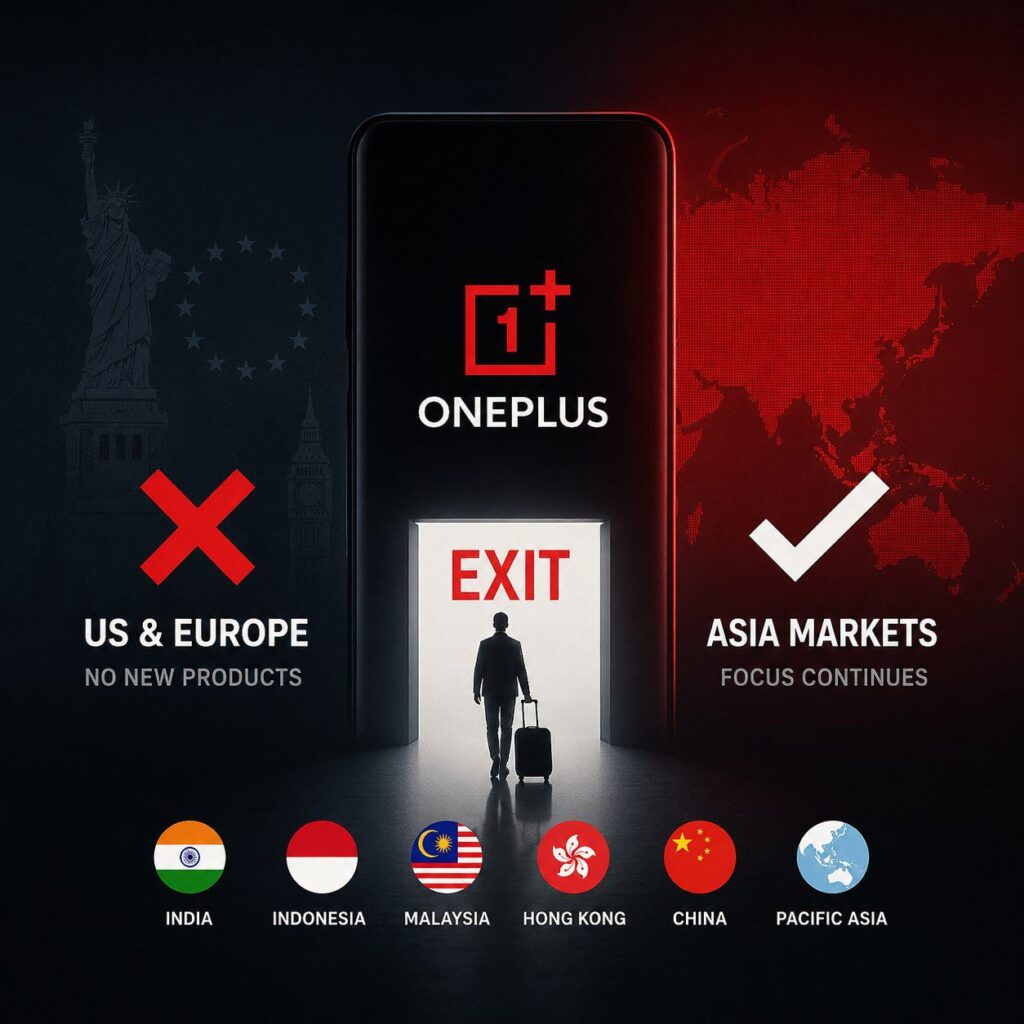
What’s Happening? The Key Takeaways
If you are a tech fan in the West, this news is tough to swallow. According to the leaks, here are the main details of the rumored exit:
- No New Launches: OnePlus will stop releasing new smartphones, tablets, and wearables in the US and Europe.
- Updates Will Continue: If you currently own a OnePlus device (like the OnePlus 12 or 12R), don’t panic. Existing devices are expected to keep receiving software updates and after-sales support.
- The Focus Shifts East: OnePlus is not shutting down globally. Instead, the brand will double down on its key markets, including India, China, Indonesia, Malaysia, Hong Kong, and Pacific Asia.
- Shrinking Operations: Western offices and staff sizes have reportedly been quietly shrinking behind the scenes for months.
Why is OnePlus Leaving the West?
While nothing is official until OPPO speaks, industry analysts point to a few major pain points that have been building up over the last few years:
1. The Global Memory Crisis & Rising Costs
The smartphone industry is currently facing a massive “memory crisis” with fluctuating RAM and storage component costs. For a brand that prides itself on offering high-spec devices, rising manufacturing costs make it incredibly hard to maintain competitive pricing in Western markets. If this crisis continues, OnePlus might not be the only brand forced to make tough geographic decisions.
2. Legal Battles in Europe
OPPO and OnePlus have already faced severe regulatory hurdles and patent disputes (particularly with Nokia) in Germany and other European countries over the past couple of years. Navigating these legal minefields has been incredibly exhausting and expensive.
3. The Carrier Monopoly
In the US, carriers (like T-Mobile, Verizon, and AT&T) control the smartphone market. For an unlocked-focused brand like OnePlus, breaking into and staying in carrier stores is an uphill battle compared to Apple and Samsung.
What Does This Mean for India and Asian Markets?
For fans in India and Asia, there is actually a silver lining here.
Since India remains OnePlus’s crown jewel market, diverting focus away from the West means more localized attention, aggressive pricing, and faster rollouts for Asian markets. Instead of spreading resources thin globally, OnePlus can focus on fighting Xiaomi, iQOO, and Samsung head-on in its most profitable regions.
Editorial: The End of the “Never Settle” Era in the West
For Android purists, this feels like a heartbreaking conclusion. OnePlus started as an invite-only underdog in 2014, offering flagship specifications at half the price of a Samsung Galaxy.
While the brand gradually transitioned from a “community-first underdog” to a mainstream corporate giant under OPPO’s wing, it remained one of the very few viable premium alternatives to Apple and Samsung in North America and Europe.
If OnePlus pulls the plug this Thursday, Western buyers will have one less choice—and in a market already dominated by a duopoly, that is never good news for the consumer.
Over to You!
Would you miss OnePlus in the West? Do you think this is the right move for OPPO to protect its profits, or is it a massive mistake?
Let us know your thoughts in the comments below!
For the latest technology updates, visit the Latest News page.
Stay up to date with technology news on our Telegram page.